
AGILE Learning
Self-Directed Education in community.

We offer community-centered Self-Directed Education at TCC’s Agile Learning Center for ages 5-18+. This drop-off program meets Monday through Thursday, 9:30 to 3:30, with aftercare available until 4:30.
Our campus includes an inviting indoor library & makerspace as well as an outdoor adventure playground, organic gardens, pastures, and forests & trails to explore. We are in the process of expanding our campus to include even more indoor and outdoor spaces for learning and creation of all types.
THE SOIL WE GROW IN IS TRUST.
We continue to meet and play outdoors often - land-based connection is central to the connection work we practice here. Being outside lowers risk of the ongoing COVID-19 pandemic to ourselves as well as the broader community. Young people here always have access to all of the indoor resources. Spending time outdoors and interacting with green spaces also enhances our general well being.
We center connection, consent, and autonomy in community.
JOIN US
|
JOIN US |


We support everyone here in taking an active role in creating the community they want and in learning what and how they want to learn. Because we practice Self-Directed Education, each day here looks a bit different! We use consent-based decision-making to establish some predictable rhythms, such as beginning our days with land and animal care.
We set intentions at the start of our days that tend to include participating in optional learning offerings, pursuing personal projects, and free play. The young people choose to engage with various materials, tools, and spaces, and in many different ways, which shapes how the days flow. The possibilities of what young people can do are endless!
We learn more from the culture of which we are a part than the content we are taught. At TCC, we emphasize creating an affirming and healthy culture so that young people here are seen, safe, and supported. This creates the conditions for learning in community.
We use tools for self-organization and intentional culture creation, supporting everyone in our community to engage authentically with the world through their passions and strengths. We also use these tools to practice ongoing cycles of reflection, change, and growth.
We ask:
What's working?
What isn't?
What might we change?
What might we try?
Repeat.
INTENTIONAL CULTURE CREATION


“Being in a community allows us to learn together and uphold each other’s interests. We’re able to share and create together; it’s not just any one individual person’s thing. we inspire each other…to be engaged. We all are able to do that for each other, because we’re able to voice our opinions, communicate clearly, and be kind”
TCC Learner, age 15
what does it look like?
Sometimes you do just have to see it to believe it!
We invite you to give this short video from our colleagues at ALC Mosaic a watch - what the young people and facilitators describe mirrors many aspects of the culture we’ve created here, and their voices offer a glimpse into what being a part of an Agile Learning Center looks and feels like.
What do YOUNG PEOPLE AT TCC do?
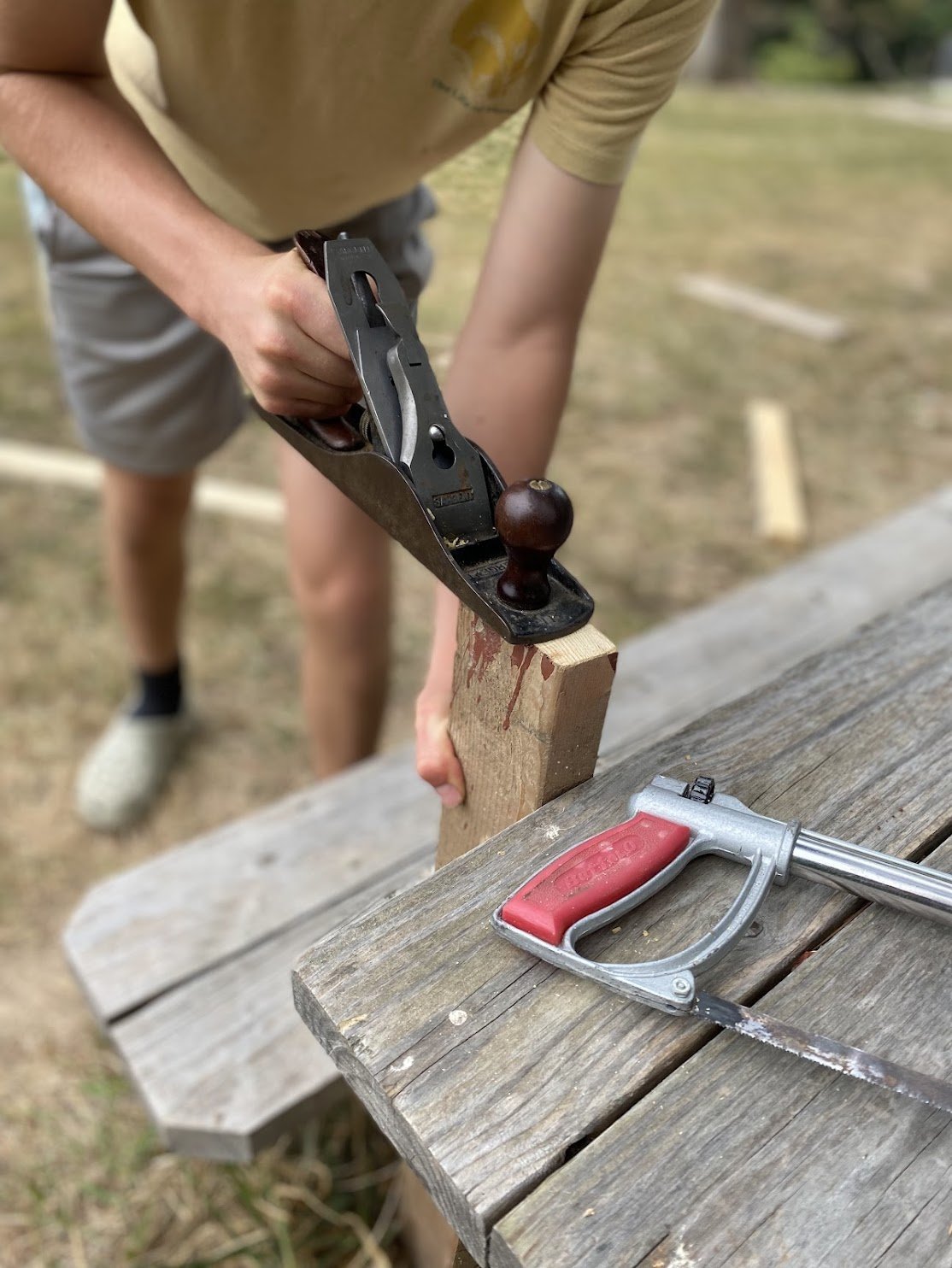
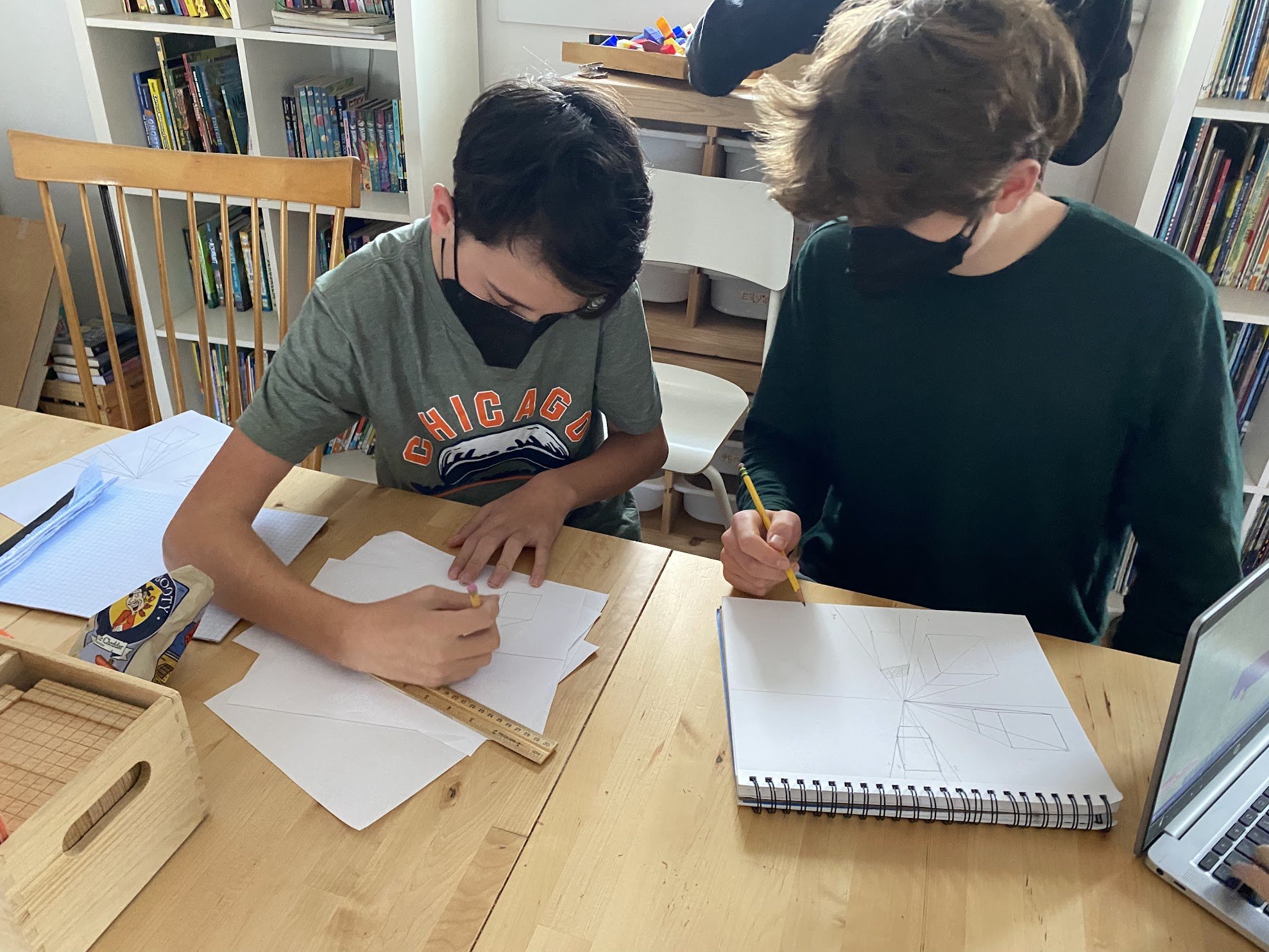
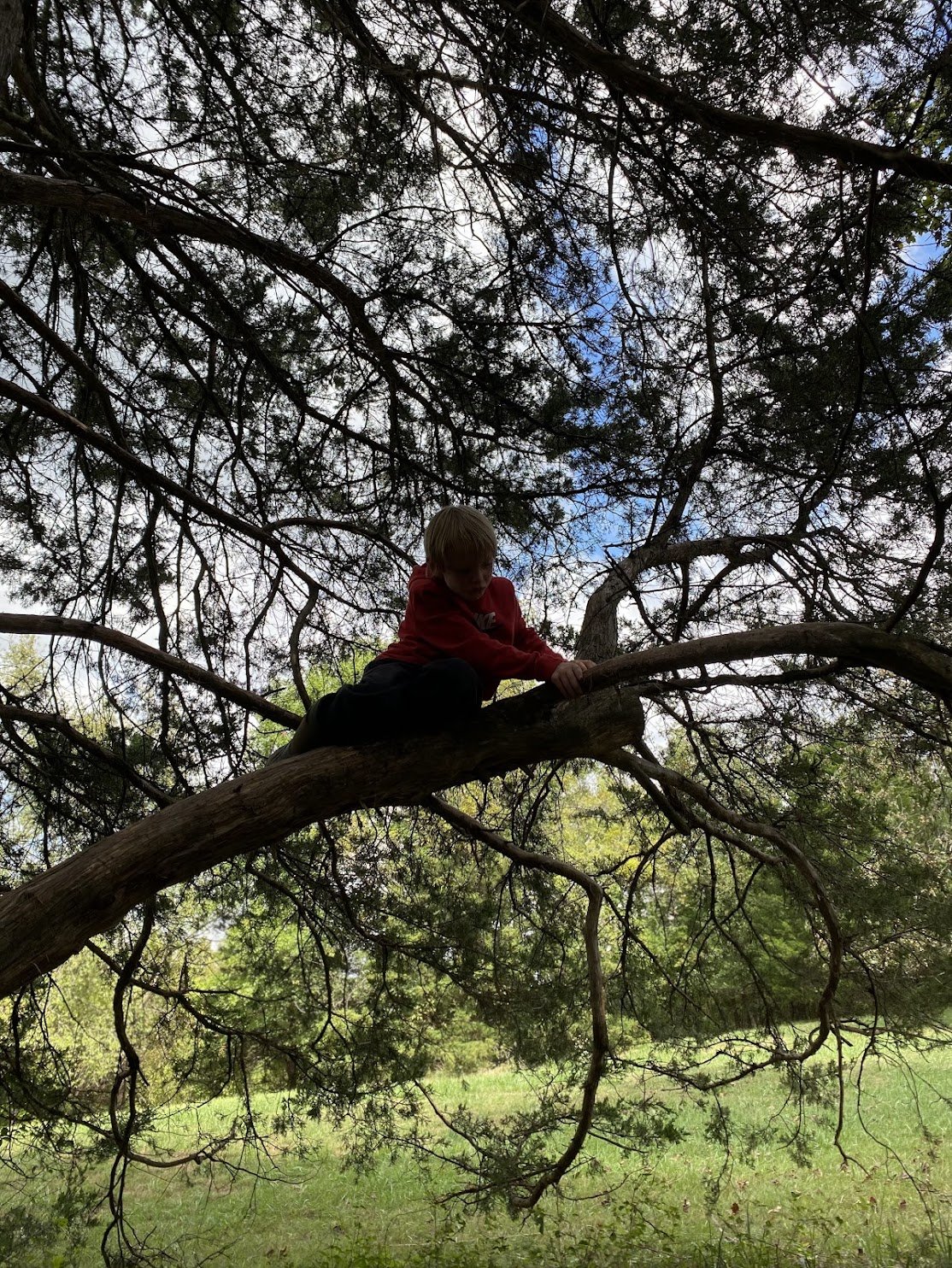
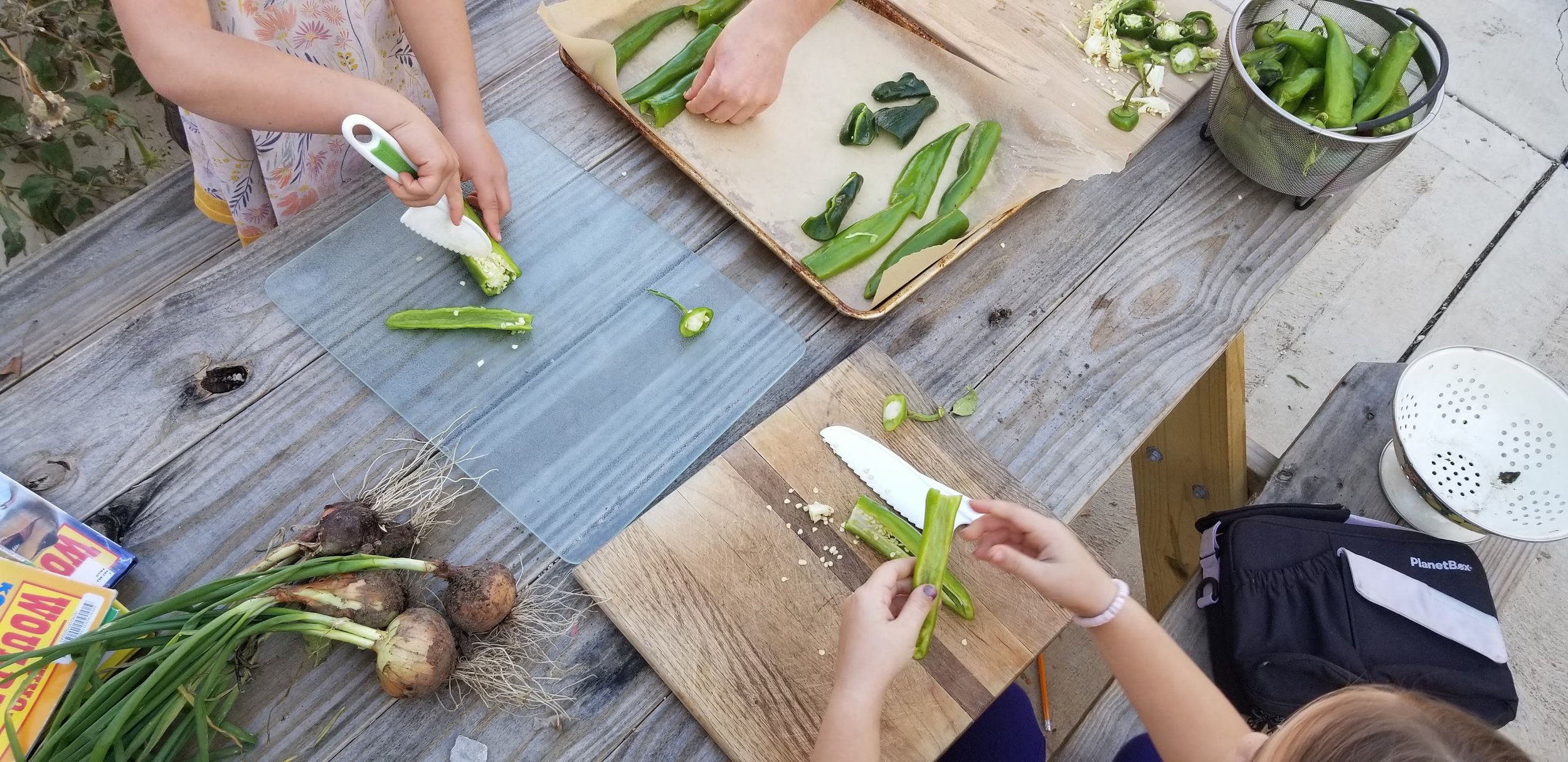
On any given day, you might see young people reading, woodworking, foraging, digging in the garden, exploring the forest, discussing a mathematical scenario, playing board games, planning mutual aid, writing essays, swinging in hammocks, researching historical events, looking up insects in a field guide, playing video games, climbing trees, making mud pies…often, children’s enthusiasm is contagious, and we inspire one another.
Because everyone here has the space to learn and explore what they wish, the possibilities are practically endless! The role of facilitators is to engage with maximum support and minimal intervention. If young people decide they would like to continue their education into college, we support them in preparing for their journey as the young person leads the way.
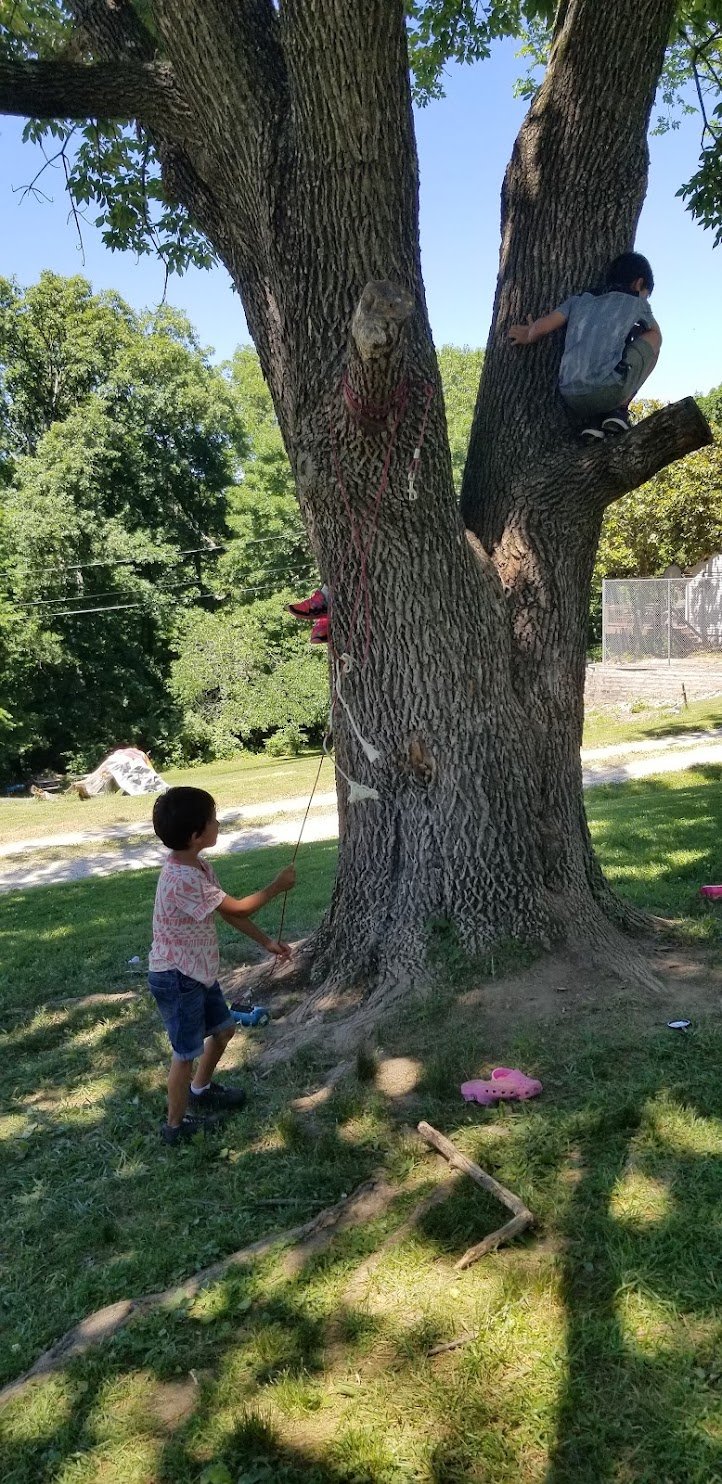

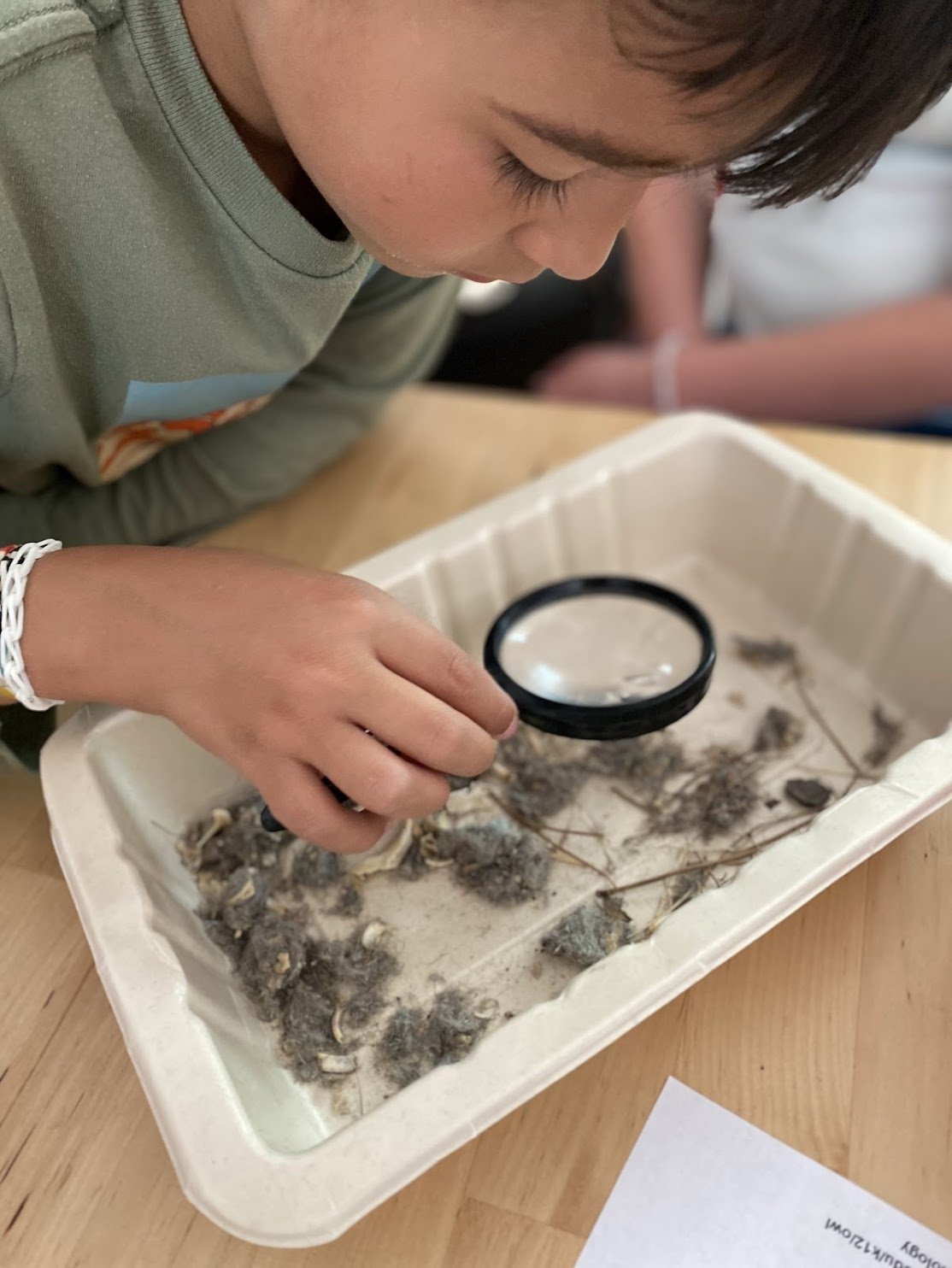

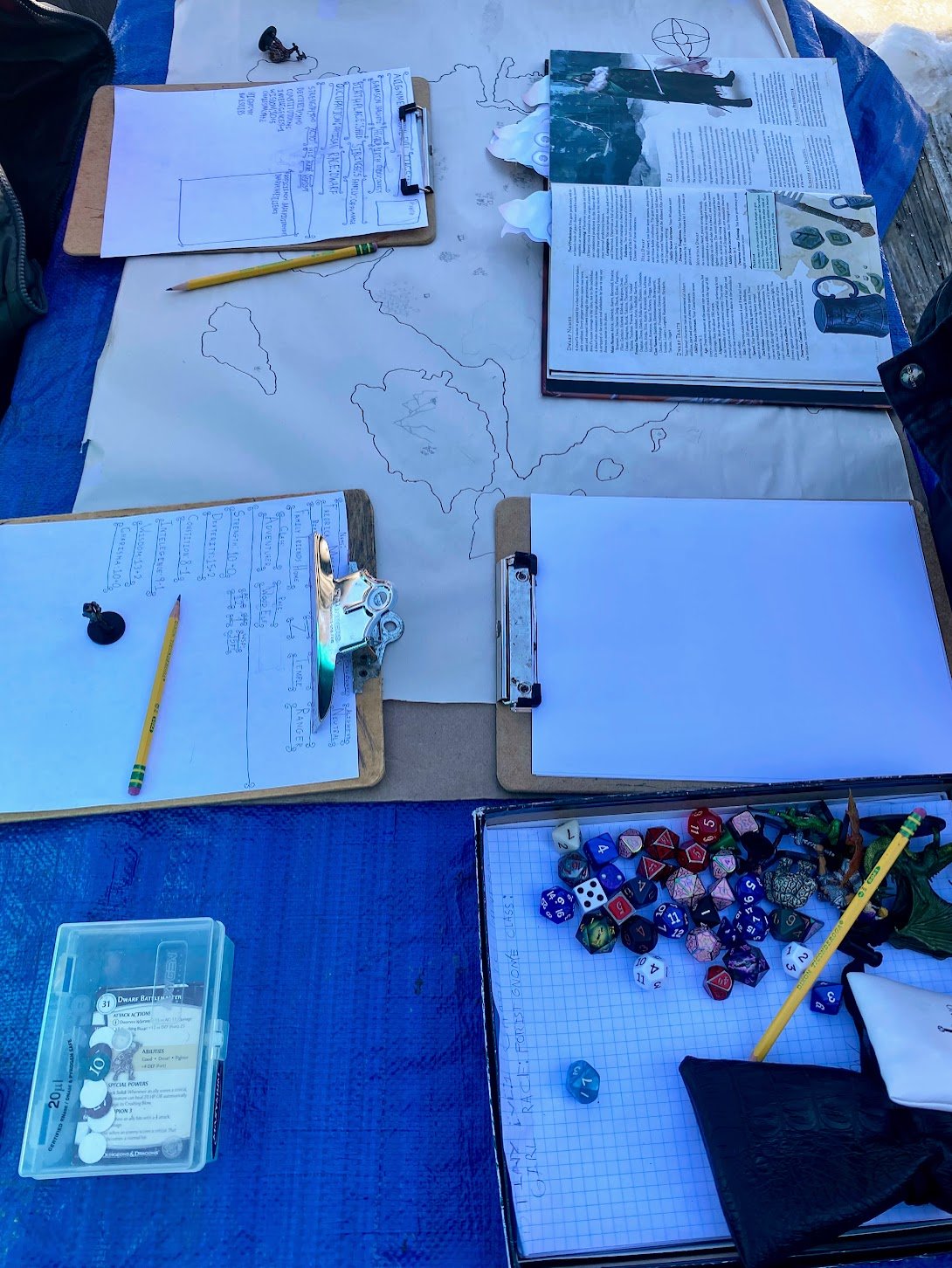
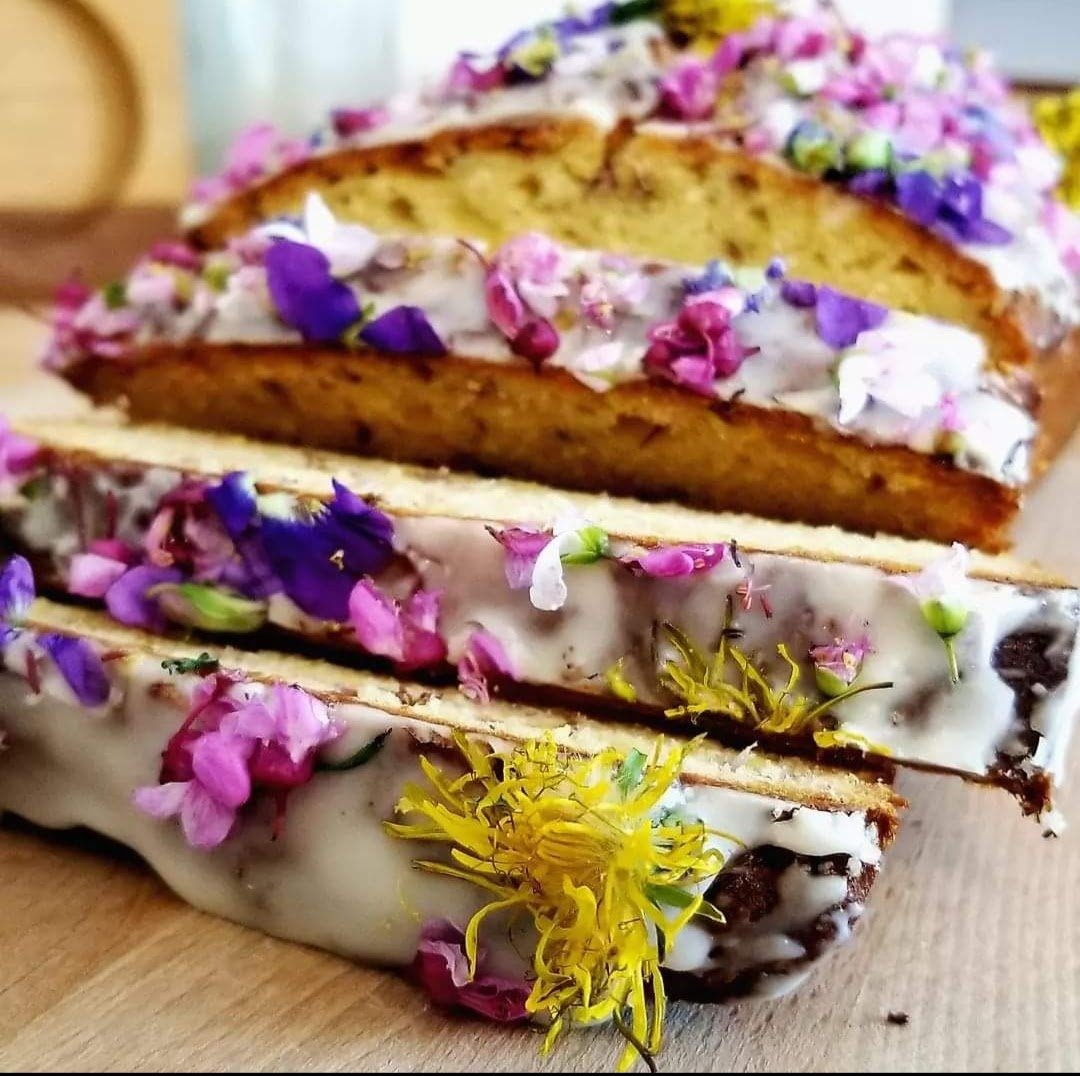


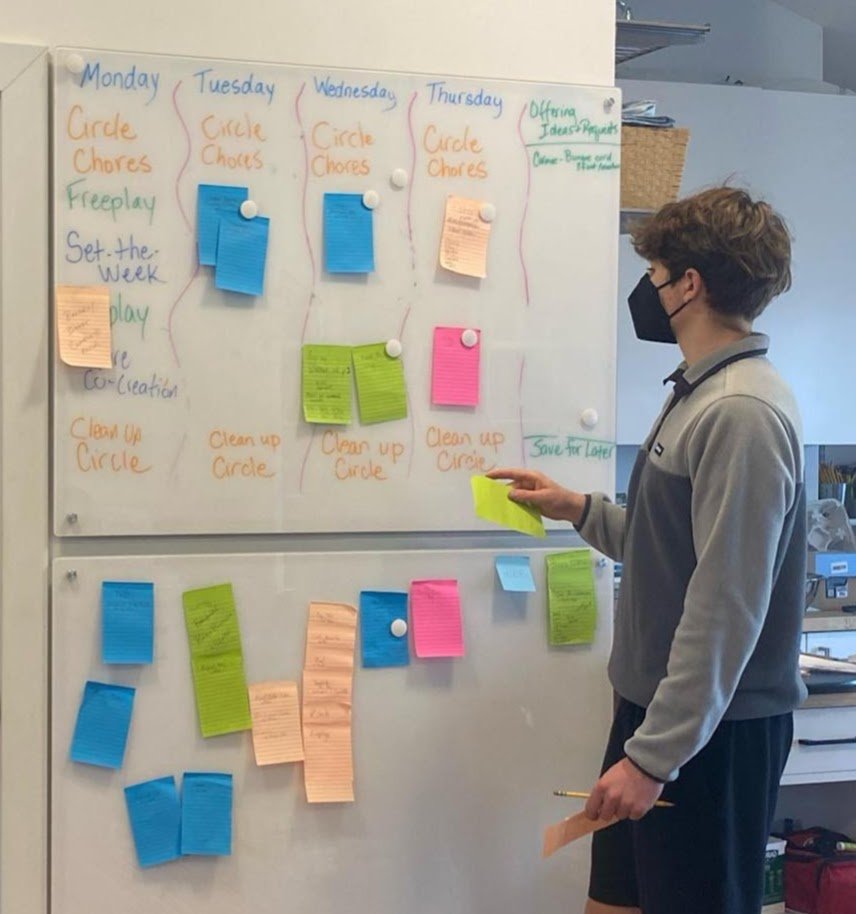
At the start of our week together, we gather in the morning for our Set the Week meeting, during which we outline which one-time or series offerings will go on the board for the week. We also use this day to nurture 1:1 connections between young people and facilitators. In the afternoon, we meet for what we call “culture keeping.” We use this time to actively reflect on how our culture is feeling to us all, and what awarenesses we have about things that are going well or that we would like to change. We consider the feelings and needs that accompany these awarenesses, and then collectively generate ideas called "try-its" that move us forward in our cycle of reflection, change, and growth.
-
A Day at The Children's Community, Tuesday through Thursday:
9:15-9:30 Arrival
9:45-10 Morning Circle Meeting
Young people start arriving between 9:15 and 9:30 and congregate on the hilltop, greeting one another and preparing for our morning circle. We congregate around 9:45 and share any announcements, remind folks about what's on "the board" for that day (we compose our weekly board of offerings and experiences each Monday during a gathering called "Set the Week"). Following morning meeting, folks head to the barnyard or to other places on the land for what we call "care tasks." These may be barnyard chores, land clean-up, or other forms of care-based maintenance for our shared space. These roles have been negotiated by consensus in community.
10:30-11:30 "Refuel," Open Play, and 1:1 Connections
This is the window in the morning we've determined as a community during which we benefit from snacking, connecting, and learning through open play. We also use this time to hold 1:1 connections between facilitators and young people. During these connections we check in with one another, reflect, plan, dream up offerings to share or attend, and set goals, depending on the young person's wishes and needs.
11:30-12:30ish - Offering Block 1
This is a time for young people or facilitators to share a one-time or series offering. Offerings are just that - offerings, which means they are optional for us all. Some series offerings gain meaning from attendees committing to the entire series, and we hold a lot of nuance and flexibility in those commitments that we encourage. Examples of past offerings include: foraging for black walnuts, cooking (we do so much cooking!), something the young people refer to as "TCC Awesome Math," various video series, History of the World, printing t-shirts, Current Events & History of Resistance Movements, forest building, Improv, DIY Dog Treats, clay formations, and so on. The possibilities are endless!
*Young people are encouraged to eat and drink and meet other basic needs throughout the day. We do also encourage folks (including facilitators) to periodically pause and nourish themselves as an agreed-upon way of making sure we're all listening to and taking care of our bodies.
1:30-2:30ish Offering Block 2
In addition to offerings, young people pursue personal projects and investigations and engage in open play throughout the day. If a young person comes to us with a clear personal interest or project that they need a dedicated space to work on inside, we support and create space for this - this could be reading, building with Legos, making music on a synthesizer, creating with clay, practicing a foreign language - again, the possibilities are practically endless.
2:40-3:00-ish Community Care
Lots of people here mean lots of messes as well as general maintenance and upkeep of the spaces! Things get messy. We ask that everyone, big and small, help clean something up during this time. We do our best to support another in choosing a community care job that works for them. Do they like wiping? Organizing? Sweeping? Shelving books? What is a care task that they feel capable of doing independently? We help them choose a consistent task they can do each day to support campus care, and support changes in jobs to be made as needed.
3:00-3:15 Closing Circle and Reflection
We circle up on the hilltop prior to pick-up and use this opportunity to reflect on our days:
What was a highlight?
What was a lowlight?
What feelings and needs do you have heading into tomorrow?
Reflections shared at closing circle may prompt more conversation and engagement in community - perhaps a conflict needs support and repair, or the community wants to do more of something that made for many peoples' highlights on a given day. This end-of-day gathering is an additional tool for our process of reflection, growth, and change.
Fridays
Currently, Fridays are "off days" for the TCC agile learning center. Some teens who attend Monday - Thursday choose to participate in our adjacent Flying Squad program that meets alternating Fridays in various locations around St. Louis.
Still curious?
